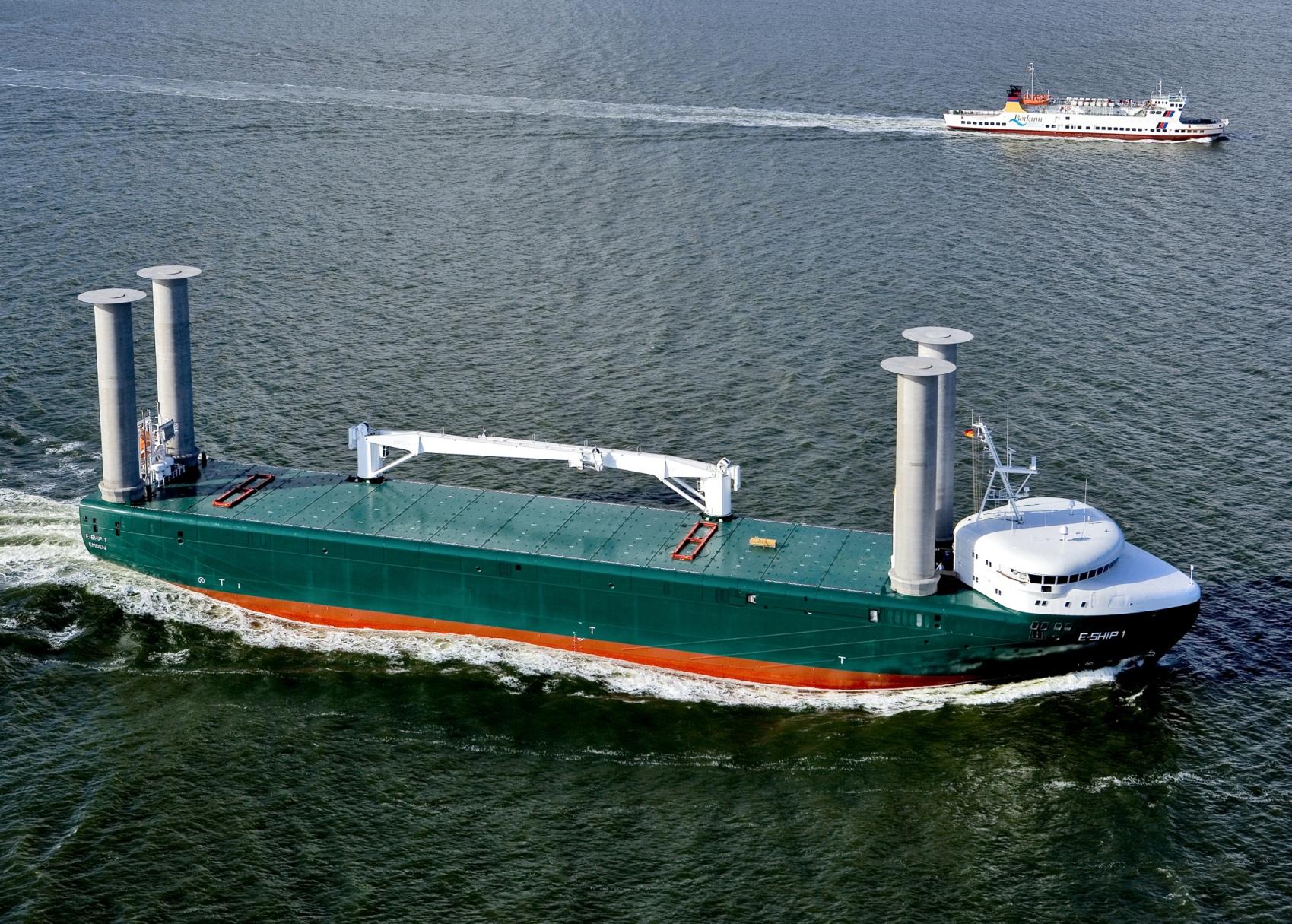
One of shipping’s oldest energy sources is making a comeback in a completely different form. Maersk, the world’s second-largest container shipping company, has agreed with British firm Anemoi to pilot the installation of a 35-metre-tall rotor sail on a containership, with the aim of reducing fuel consumption and emissions.
This is not a conventional sail. The so-called rotor sails or Flettner rotors are large vertical cylinders that rotate mechanically. As the wind flows around them, a pressure difference is created via the Magnus effect, generating thrust in the direction of the ship’s movement. The engine remains the primary propulsion, but requires less power and consequently less fuel.
According to the Financial Times, an Anemoi system costs approximately $600,000–$1.2 million per rotor, excluding installation, and under suitable conditions can save about one tonne of fuel and three tonnes of CO₂ per day per sail. Usually, more than one is installed. Overall, wind assistance can reduce consumption by about 5–25%, depending on the vessel and the route.
The technology is not a theoretical solution. The IMO considers wind assistance to be one of the available technologies for improving the energy efficiency of ships, while rotor sails, rigid wings, suction sails and kites are already in commercial use.
Why now?
The economic incentive is reinforced by legislation. Shipping has been included in the European ETS, while from 2026 the system will also cover methane and nitrous oxide emissions. At the same time, FuelEU Maritime mandates a gradual reduction in the greenhouse gas intensity of ship energy, reaching -80% by 2050.
Wind assistance cannot zero shipping emissions on its own. However, it has a significant advantage: it immediately reduces the amount of fuel required, whether that is fuel oil today or more expensive green methanol, ammonia, or another fuel tomorrow.
The energy transition at sea may ultimately also include a technology that shipping has known for centuries: the wind itself.
Source: Financial Times