Just days before the crucial vote by EU member states on the revision of the methane regulation, more than 30 civil society organisations are making an urgent appeal to the European Commission to reject changes that would weaken one of the most important tools of European climate policy.
In a joint letter to President Ursula von der Leyen, Executive Vice-President Teresa Ribera, and Energy Commissioner Dan Jørgensen, the organisations express deep concern over the direction taken by the legislative process to amend the Regulation. They argue that an initially limited Commission proposal, designed to address specific implementation challenges, is gradually being transformed into a broader renegotiation of the legislation under pressure from political and industrial interests.
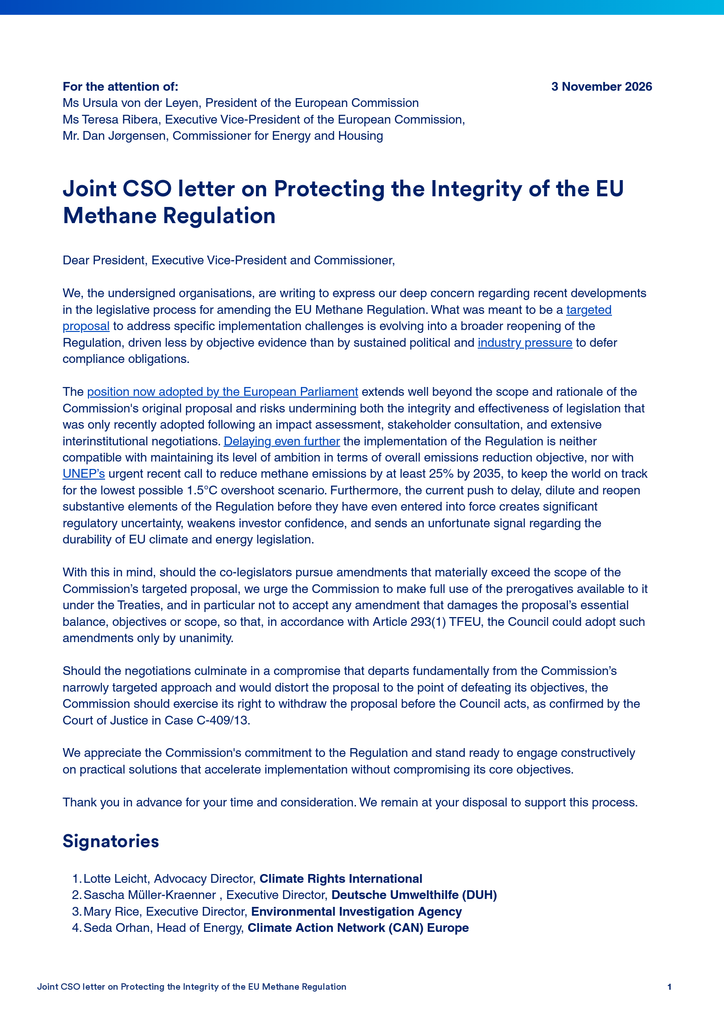
Among the signatories are leading environmental organisations such as Greenpeace, WWF European Policy Office, Friends of the Earth Europe, Climate Action Network Europe, Environmental Defense Fund Europe, Global Witness, Clean Air Task Force, and Ember, reflecting the breadth of concern surrounding these developments.
The vote on 6 November is expected to mark a decisive moment for the future of the European framework for tackling methane emissions. The question is whether the EU will remain a global pioneer in reducing one of the most potent greenhouse gases, or whether it will allow legislation considered critical to achieving its climate targets to be undermined.
The importance of the regulation and the pressure to downgrade it
The Methane Regulation (EU 2024/1787) incorporates a core principle of modern European legislation: responsibility across the entire supply chain. Importers of oil, fossil gas and coal are required to monitor, measure and report the methane emissions linked to the fuels they supply, as well as to work towards reducing them. Transparency and accountability are not intended as a bureaucratic exercise, but as a prerequisite for reducing one of the most potent greenhouse gases.
Succumbing to pressure from the oil industry, with the European People’s Party as its main political advocate, on 14 October, the European Commission proposed a one-year postponement of key provisions of the regulation. A week later, on 22 October, the European Parliament further weakened the proposed rules and voted for a three-year suspension of the implementation of fundamental monitoring, reporting and verification requirements for importers’ emissions, as well as the rules on methane emissions intensity that apply to both EU importers and producers.
“There is no excuse for a three-year delay. Even one year was already a significant concession, and any further delay undermines the EU’s global credibility on climate action. The EU Methane Regulation is the world’s only legally binding standard for methane imports and one of the most important climate legislations adopted globally this decade. Caving into political and industry pressure is a failure of European leadership and puts at risk one of our best opportunities to slow global warming in our lifetime,” said Brandon Locke, spokesman for the international organisation Clean Air Task Force.
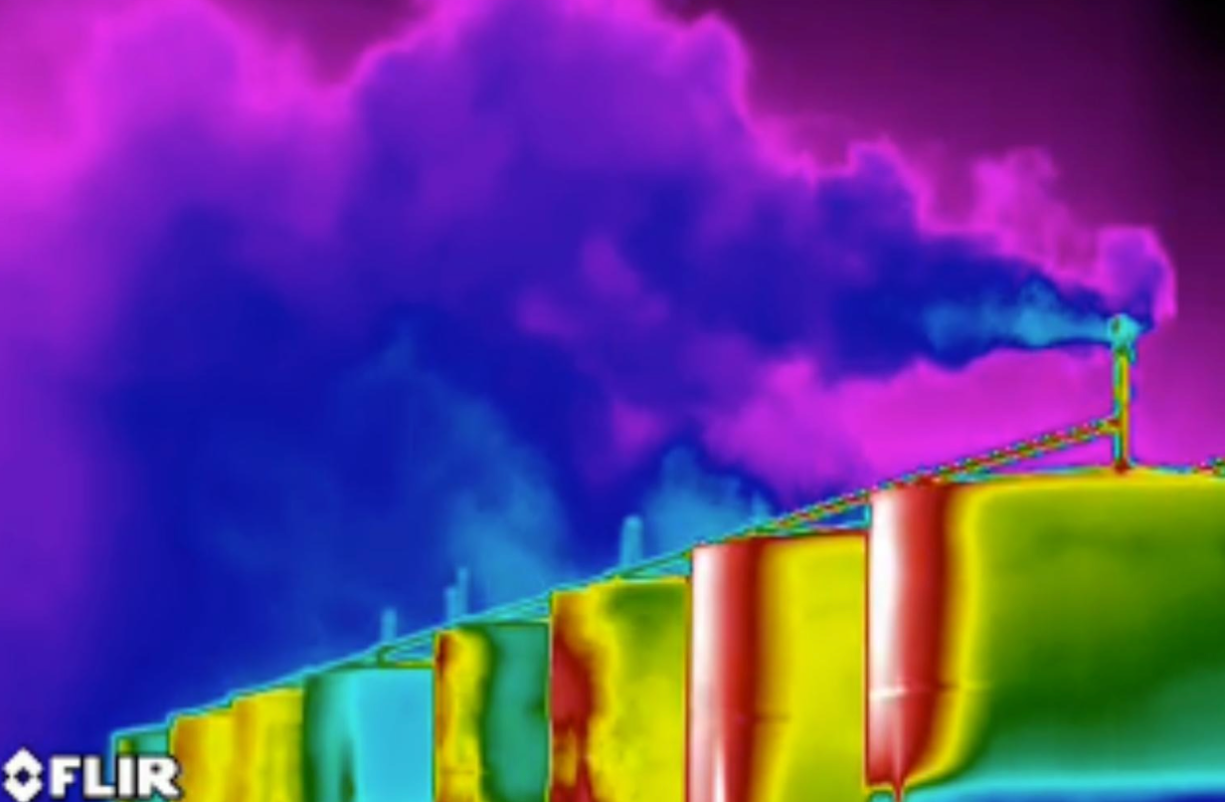
Photo: Methane leak from oil tanks, as seen through a specialized optical gas imaging camera. Photo credit: Oil Field Witness