“Voluntary, but the first to describe how the world can leave oil, gas and coal behind. The next critical step is Antalya”
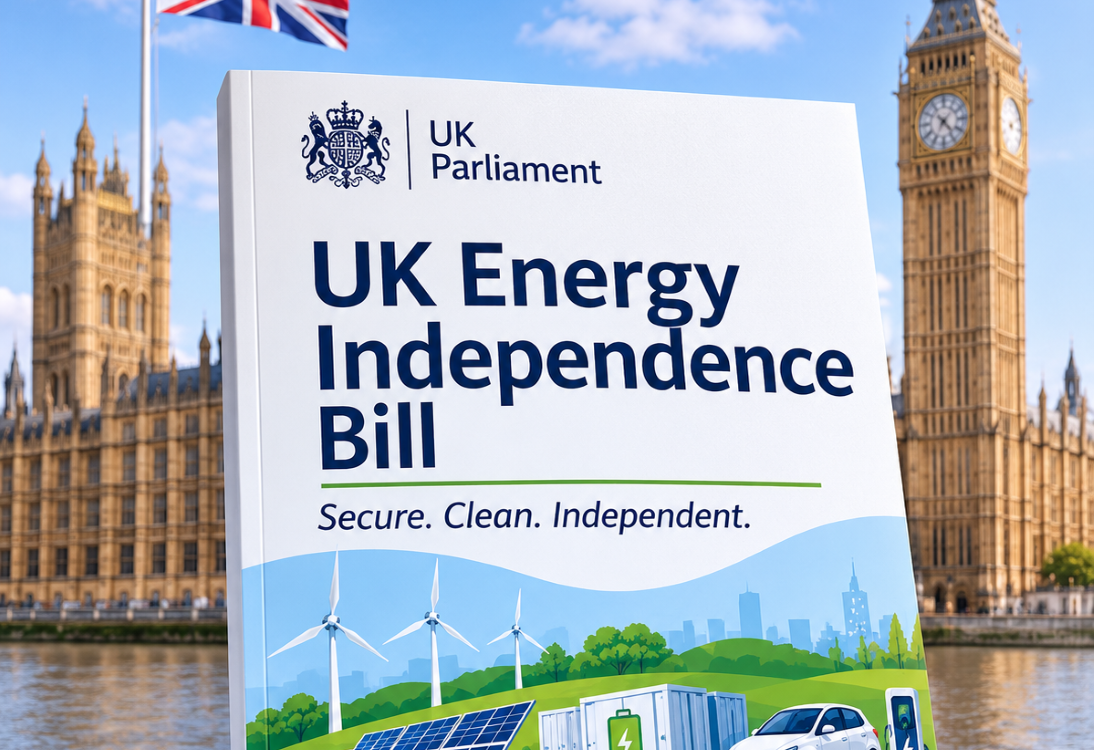
On 3 November 2026, six days before the start of the 31st UN Climate Change Conference (COP31) to be held in Antalya (9–20 November), the President of the preceding COP30, André Corrêa do Lago, and CEO Ana Toni presented the first global roadmap for phasing out fossil fuels from energy systems.
In 2023, at COP28 in Dubai, the parties agreed for the first time on the goal of “transitioning away from fossil fuels in energy systems, in a just, orderly and equitable manner, accelerating action in this critical decade so as to achieve net zero by 2050 in keeping with the science”.
Although the global roadmap was ultimately not included in the agreements reached in Belém in November 2025 due to intense pressure, the Brazilian Presidency announced that it would design the global roadmap outside of the Conference.
A roadmap outside of negotiations
The commitment was kept. The roadmap is a 182-page document which, as explicitly stated, is voluntary and non-binding in nature. Its core message is that the transition away from fossil fuels is “urgent, inevitable and yet feasible” and that every country can start today, whatever its starting point may be.
“Every country from its own starting point”
A central “tool” of the roadmap is the Belém Readiness Approach. This approach assesses the extent to which each country is exposed to fossil fuels and its ability to manage the transition across three (3) key areas: energy demand (transport, industry, buildings), energy supply (how fossil fuel production adjusts as demand falls), and the broader economy (fiscal dependence, investment, cost of capital). It also includes indicators and ways to measure the strengths and challenges faced by each country.
Roadmap and Santa Marta
The COP30 Presidency had announced that the roadmap would also be informed by the dialogue and outcomes of the First International Conference on the Transition Away from Fossil Fuels, which took place from 24 to 29 April 2026 in Santa Marta, Colombia.
A total of fifty-seven (57) countries participated in the conference, which focused exclusively on moving away from fossil fuels, with twenty-seven (27) of them represented at ministerial level. Greece did not participate in the conference.
The dialogue in Santa Marta was less structured compared to the COPs and was based on a more participatory process. The dialogue and the conference conclusions are organised into five (5) pathways: 1. Collective action for the transition away from fossil fuels through global cooperation, 2. Accelerating progress globally, spreading the spirit of Santa Marta, and achieving coordination among international institutions, 3. Designing or strengthening national and local roadmaps for the phase-out of fossil fuels, 4. Overcoming macroeconomic dependencies, the interconnected relationships that develop among the key metrics of an economy related to fossil fuels, and 5. Aligning producers and consumers towards decarbonising trade and supporting the green economy.
The development of science-based national roadmaps for the transition away from fossil fuels, which take into account different national and local characteristics and provide feasible pathways and directions, was one of the main conclusions of the participants at the Santa Marta conference. "The question is no longer whether the phase-out of fossil fuels will take place, but how it will be organised, governed, financed, and how it will be carried out in a fair manner," is one of the characteristic conclusions reached in the Santa Marta report.
The next conference will take place in Tuvalu in 2027, with a preparatory meeting in Ireland.
Santa Marta complementary to COP
The two processes share the same goal, but operate differently. COP operates by consensus of all Parties to the UN Framework Convention. That is why the roadmap of the Brazilian Presidency ended up being a “voluntary, non-binding contribution”, without targets and without naming countries (COP30 Presidency).
Santa Marta describes itself as a “plurilateralism of the willing” and does not negotiate texts. It selects participants based on their support for the transition and states that it was designed “to complement and accelerate” the work of the United Nations Framework Convention on Climate Change (UNFCCC), operating in a complementary and supportive manner. However, Santa Marta lacks the US, China, India and the Gulf states (Carbon Brief).
COP has everyone at the table, but with low ambition. Santa Marta has ambition, but without participation from the biggest polluters and fossil fuel producers.
The Antalya gamble
The first global roadmap for the phase-out of fossil fuels is good news. The initiative to organise an International Conference on the Transition Away from Fossil Fuels is also particularly encouraging. For the first time, there is a text that does not ask whether we will move away from fossil fuels, but how. There is now also a conference that treats the transition away from fossil fuels as a given.
However, in order to produce tangible results, this global roadmap must be officially endorsed by COP31, to be held in Antalya from 9 to 20 November 2026, and linked to the Second Global Stocktake (GST2) in 2028.