Energy · Climate · The energy transition
Energy, with data and evidence
Energy briefing
The energy reality beyond the headlines
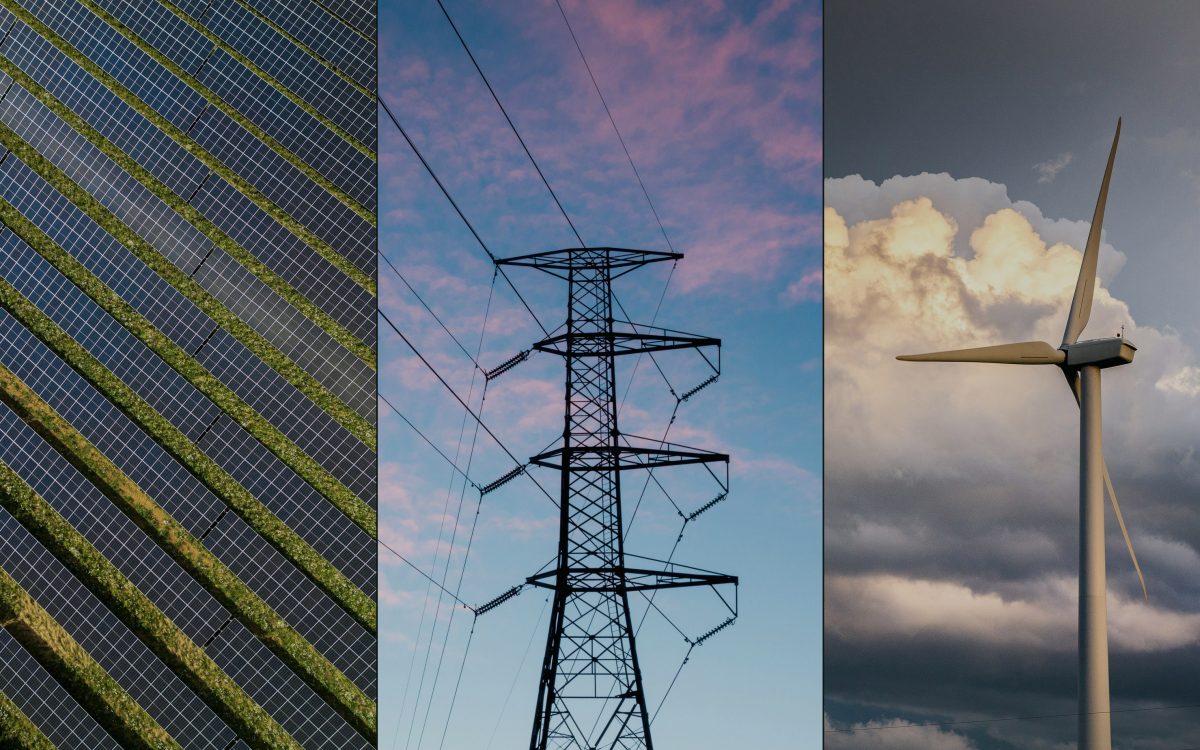
energiabook.gr puts climate at the heart of energy developments
Would you like to know more about the real cost of LNG, the Vertical Gas Corridor, the Emissions Trading System (ETS), or Europe’s and Greece’s methane emissions and…
Vertical Corridor: Energy strategy or mechanism of long-term dependence on US LNG?
Supporters of the Vertical Corridor for fossil gas transport praise it as a tool for energy security, decoupling from Russia and establishing…
Expensive electricity, special arrangements: Europe remains hostage to gas
On 20 October, the wholesale electricity price in the Day-Ahead Market (DAM) reached 247 €/MWh, a yearly high, while from 19 October…
Greek electricity generation
Greece’s power mix
Share of electricity generation, September 2026
- Solar 35%
- Wind 23%
- Hydro 7%
- Fossil fuels & other sources 35%
- Renewables, total 65%
Renewables in power generation
65%
Greece, September 2026
Annual renewables share
50%
Greece, full year 2025
+2.3 pts against the EU
EU average
48.1%
European Union, 2025
Solar & wind
58%
Combined, September 2026
The planet in numbers · Climate Watch
CO₂
Carbon dioxide
426.07 ppm
in the atmosphere · September 2026
ppm in the atmosphere · Mauna Loa, annual means
+110.09 ppm since the first reading, in 1959
CH₄
Methane
1,934.6 ppb
in the atmosphere · June 2026
ppb in the atmosphere · global mean
+357.0 ppb since the first reading, in 1979
°C
Temperature anomaly
+1.52
January–October 2026 average · Copernicus / ERA5
°C against 1850–1900 · ERA5, annual means
°C above the 1991–2020 mean, which is itself +0.88 against 1850–1900
+1.77 °C October 2026, latest month
All three are measurements, for the most recent month each source has published — not estimates, and not real-time calculations. Sources: NOAA Global Monitoring Laboratory (annual and monthly means for Mauna Loa CO₂ and global CH₄) · Copernicus Climate Change Service / ERA5 for temperature, on the 1850–1900 baseline as Copernicus itself gives it. Sources: NOAA Global Monitoring Laboratory (annual and monthly means for Mauna Loa CO₂ and global CH₄) · Copernicus Climate Change Service / ERA5
Data
Energy & climate tracker
Two dashboards that update themselves from published data: one for the Greek grid hour by hour, one for the planet’s carbon.
EnergyPulse
Greek electricity generation hour by hour: the fuel mix, demand and wholesale prices, from the transmission operator’s own published data.
OpenEmissionsPulse
How much CO₂ the planet emits, from which fuels and which countries, and what the atmospheric curve has done from 1958 to today.
OpenAsk the experts
You ask, we investigate.
Send us the energy question on your mind. We answer with figures and references to the sources — not with generalities.
- You pick a topic and write your question.
- We pass it to a specialist in that field.
- The answer is published openly, with its sources.
About us
Independent by principle
energiabook.gr is an independent platform for reporting and analysis on energy, climate and the energy transition.
No advertising. No dependence on energy-market interests. We examine the environmental, economic and social dimensions of every energy choice.
No advertising
No commercial placement decides what we publish or how we present it.
No dependencies
We are not funded by energy-market interests, and we say so openly.
Sources throughout
Every figure and every claim carries its source, so that it can be checked.
The contributors
Meet the experts
Editorial team
- Stavros NTAFIS Physicist and meteorologist, Ph.D.
- Theodota Nantsou Head of Environmental Policy, WWF Greece
- Ino Sioziou Energy policy adviser and analyst of climate and environmental issues (M.Sc.)
- Giorgos Kyros Data Analyst & Visualization Specialist @ N.O.A / Meteo.gr & Climatebook
- Konstantinos Karagkounis Energy and environment analyst
- Sokratis Divolis Physicist, MSc in Energy and Environment
- Vassiliki Kotroni Research Director, National Observatory of Athens






Scientific committee
- Dimitris Kollias Strategy adviser specialising in the green transition, actively involved in flagship initiatives
- Emmanouela Doussis Professor, Department of Political Science and Public Administration, National and Kapodistrian University of Athens
- Nikos Charalambides Executive Director, Greenpeace Greece
- Nikos Mantzaris Co-founder and Senior Policy Analyst, The Green Tank
- Sandy Fameliari Environmental physicist, graduate of the Physics Department of the University of Athens, with a public diploma in renewable energy
- Sevastianos Moirasgentis Research Director, National Observatory of Athens
- Stelios Psomas Strategy Adviser, Hellenic Association of Photovoltaic Companies
- Vaggelis Marinakis Assistant Professor, School of Electrical and Computer Engineering, National Technical University of Athens