There are quite a few people who monitor the wholesale price on the Hellenic Energy Exchange at specific times of the day, compare it with the charge on their bill, and jump to easy conclusions, curse windfall profits and engage in oversimplified reasoning.
Often they equate the “cost of electricity” for their supplier with the wholesale price, that is, the production cost determined each hour by the most expensive fuel. However, this only shows part of the truth. The real cost also includes the capacity that must be available for peak demand, transmission and distribution networks, production and investments made, losses, metering, and even customer service. All of these cost money, regardless of how low or high the wholesale price is at any given hour.
Addressing this structural vulnerability does not lie in maintaining a reliance on fossil gas, but in a commitment to supporting the energy transition. Greater penetration of renewables, combined with storage, flexible demand, stronger grids and interconnections, is the only long-term sustainable path for reducing costs, energy dependence and Europe’s exposure to international fossil fuel market fluctuations.
The important distinction is between availability costs and variable generation costs. The former relates to the investments that ensure the system can meet demand at all times—grids, backup capacity, infrastructure—and accounts for the largest share of long-term costs. The latter dominates the news because it is the most visible, but it is probably not the largest piece of the “pie”. When the discussion focuses solely on the wholesale price, we forget that a large and growing part of the bill goes towards the infrastructure that keeps the system “standing”.
The problem we don’t see
Since 2021, electricity demand in Europe has not increased; it has decreased. Following the pandemic in particular, demand in 2023 was 6.4% lower than in 2021, driven by the energy crisis and the decline in industrial consumption. Over the same period, RES expanded rapidly: in 2023 they covered 44% of EU electricity generation, with wind and solar accounting for 27% of the mix, while 73 GW of new capacity was added within a single year. In Greece, the country became a net electricity exporter in 2024, with renewables covering over half of demand. In other words, we have lower demand and much more cheap green generation. So why do prices remain high?
This is where common sense disagrees with the market — because, no matter how absurd it may seem, the system does not work as the average consumer imagines. The answer lies in how the market operates. Units enter the system in order of cost, and the last one needed sets the price for everyone. Gas produces just 18-20% of electricity in the EU, but it is almost always what “closes” the system during peak hours — approximately 300 to 1,500 hours a year — and thus disproportionately sets the price. Gas remains expensive after 2022 not temporarily but structurally: Russian piped gas fell from 45% of imports in 2021 to 12% in 2025, and its place was largely taken by LNG (45-48% of imports), with the US as the largest supplier. This shift has not come without a cost: Europe now depends on a global LNG market that moves by its own rules — competition with Asia, geopolitical risks, infrastructure constraints
And this is where some classic opportunistic “antidotes” start being heard, such as VAT reductions, ad hoc subsidies, gas subsidies, differentiated tariffs. They may provide temporary relief to the consumer, but they do not even touch the structural causes, they do not change the operation of the market, and they do not reduce dependence on imported gas. At best, they offer a brief respite today without solving anything for tomorrow
The upcoming challenges
The problem will grow because electricity will cover an increasingly large share of energy consumption. Today it is at 23% of the EU’s final consumption; the target is 35% by 2030 and 61% by 2050, as heating, transport and industry are gradually electrified. This requires major investments, while one in three distribution grids in the EU is already over 40 years old.
Three new sources of cost are emerging. First, firm capacity — batteries, pumped storage, backup units — is needed to balance the variability of renewables. Second, grid reinforcement is required, as demonstrated by the blackout in the Iberian Peninsula in April 2025: the cause was not “excessive” RES generation, but the loss of 2.5 GW within a minute and a delay of hours in activating reserves, instead of seconds. The more complex grids become, the more necessary their reinforcement and energy storage utilizing multiple technologies are. Let us not forget the need to shield them from new types of hybrid threats, from viruses and drones. Third, stronger interconnection between countries is needed so that they can share reserves and absorb local problems, precisely what was missing in the Iberian Peninsula.
In conclusion, anyone looking for the cost of electricity solely in the wholesale price at a given hour is looking in the wrong place. The real cost and the real solutions lie in the investments that will support the electrification of the economy: grids, storage, flexible resources, interconnections and digital infrastructure. The challenge is not to maintain a system dependent on fossil fuels, but to complete the transition to a renewable-based energy system more quickly. As long as Europe and Greece remain exposed to international fossil gas markets, consumers will continue to pay the cost of geopolitical crises and price volatility. The gradual phase-out of fossil fuels and the development of renewables, storage and grids are not only a climate necessity; they are a prerequisite for economic competitiveness, energy security and more stable electricity prices in the future.
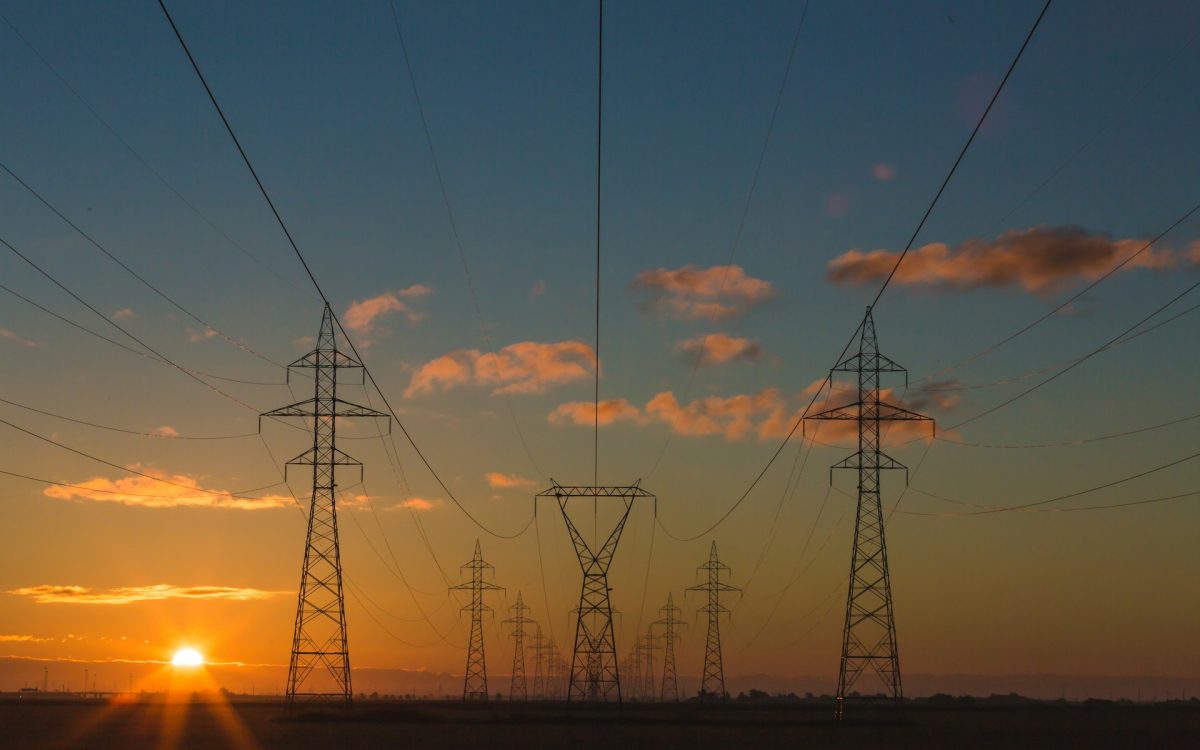
Photo: Ernest Brillo on Unsplash