The European Union approves a record grant of EUR 228.9 million for the electrical interconnection of the Dodecanese. The project promises cheaper energy, less pollution and a definitive end to the islands’ energy isolation.
One of the largest energy investments in the history of the Aegean is moving forward with strong European funding. The European Commission announced on 16 November 2026 a grant of EUR 228.9 million for the electrical interconnection of the Dodecanese with the mainland system.
This is the largest grant ever awarded to a single project through the European Public Sector Loan Facility.
From Corinth to Kos, and then to Rhodes
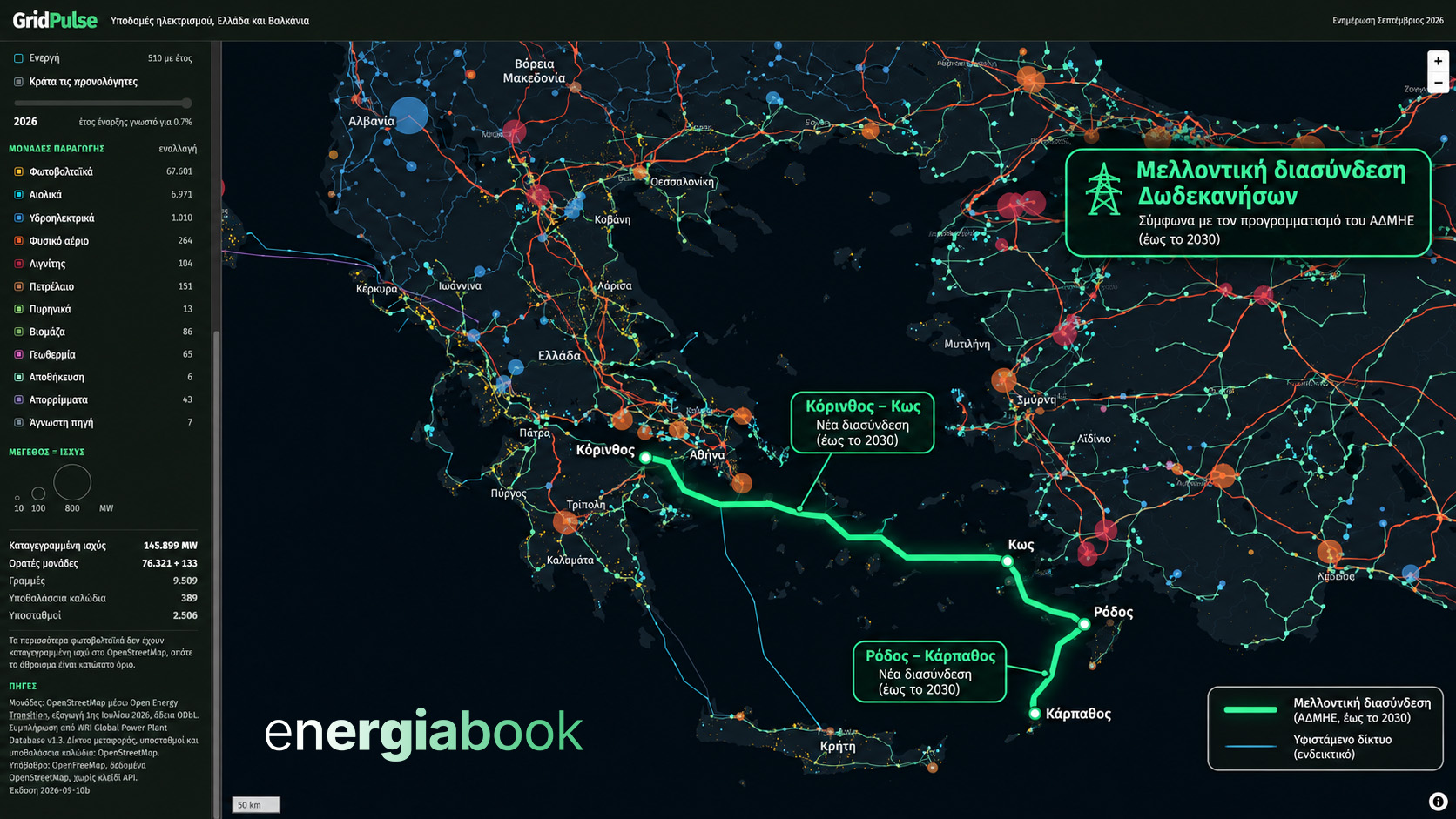
The first phase, with a total budget of EUR 2.54 billion, includes a high-voltage direct current (HVDC) submarine cable between Korinthos and Kos.
The financing is boosted by a EUR 1.53 billion loan from the European Investment Bank and a EUR 534 million grant from the Greek Decarbonisation Fund.
The second phase provides for the interconnection of Rhodes and Karpathos, bringing an end to the region’s energy isolation.
GridPulse: The energy map behind the major interconnection
Energiabook.gr presents an initial look at GridPulse, the new interactive energy infrastructure platform we are developing.
The map illustrates power generation units, transmission lines, substations and submarine cables in Greece and the Balkans, highlighting the geographical complexity of the energy system.
7.7 million tonnes less CO₂
The environmental benefit is impressive. The first phase alone is expected to reduce emissions by 7.7 million tonnes of CO₂ over 25 years, allowing for the gradual replacement of polluting oil-fired units.
At the same time, the interconnection will facilitate the development of renewable energy sources and enhance security of supply.
The major challenge, however, is whether the lower production cost will ultimately translate into a substantial benefit for consumers.
For the Dodecanese, the energy transition is no longer just an environmental target, but a historic opportunity for economic development.