New report by the United Nations Environment Programme (UNEP) on data disclosure by oil companies – DESFA among the companies disclosing data for the 5th consecutive year.
The problem of methane emissions from the oil and gas industry is becoming increasingly measurable, while technologies to curb them already exist. This is the main conclusion of the recent report “Oil and Gas Methane Partnership 2.0 — 2026: From Measurement to Mitigation, Better Methane Data Is Enabling Action” by the United Nations Environment Programme (UNEP). However, the 2026 UNEP report highlights a critical gap: while participating companies are improving monitoring and reporting, more than half of global oil and gas production still remains outside a reliable system for measuring methane emissions.
The challenge, therefore, is no longer just technical. The challenge is primarily environmental and social: how greater transparency and accountability from the fossil fuel industries participating in the Oil and Gas Methane Partnership 2.0 can be translated into a real and lasting reduction in emissions and, consequently, into the mitigation of social and economic impacts?
The Oil and Gas Methane Partnership 2.0 (OGMP 2.0) has 163 member companies from 90 countries, with the Greek companies participating being DESFA and ENAON. Overall, the initiative now accounts for 43% of global oil and gas production, providing a vital foundation for improving emissions reporting. However, the remaining 57% operates outside this public emissions accountability framework. Gaps in company participation make it difficult for regulators, investors and energy buyers to conduct comparable evaluations of suppliers.
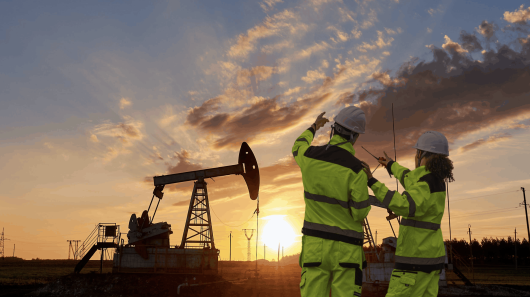
Production is the main source of recorded methane emissions: 62% comes from onshore activities and 20% from offshore installations. The remaining 18% relates to other types of facilities across the oil and gas industry value chain.
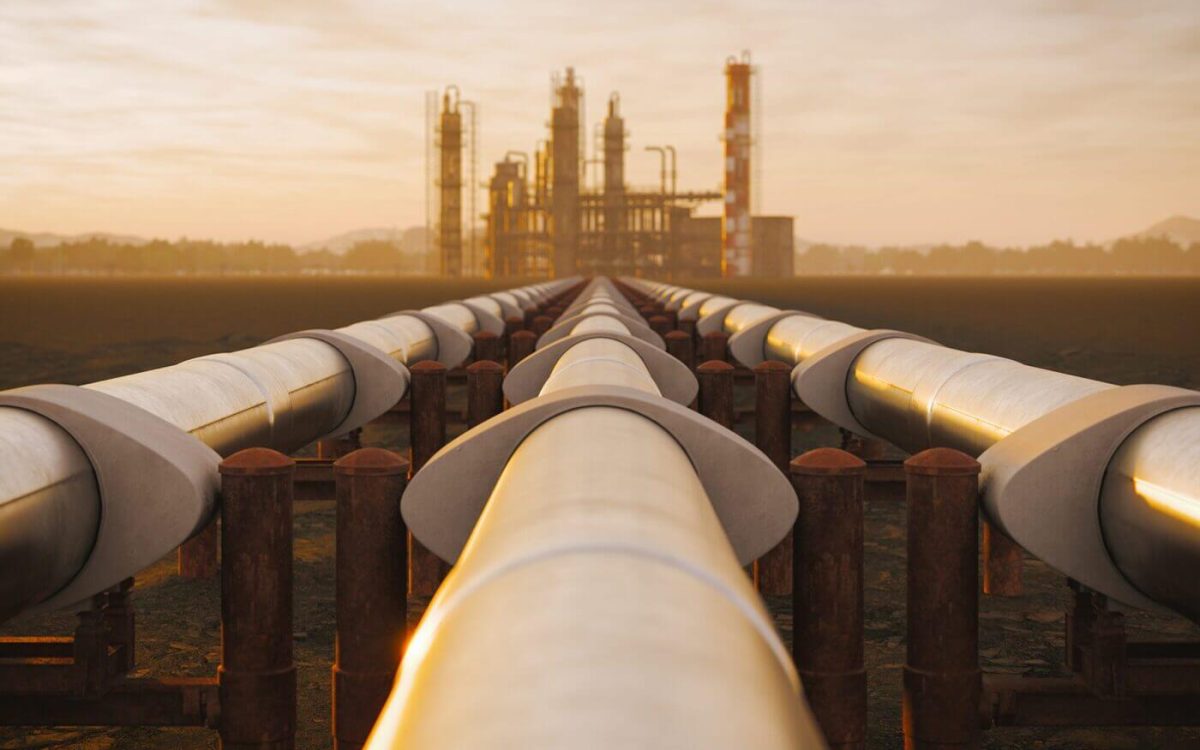
In transmission systems and liquefied natural gas (LNG) activities, significant sources of emissions include pipeline leaks, equipment malfunctions, and operational procedures. This is also of particular importance for countries that import LNG: emissions are not limited to the point of extraction (upstream), but may arise during processing, liquefaction, shipping, regasification, and pipeline transport.
Proper measurement reveals previously unrecorded emissions
One of the report’s most significant conclusions is that improved measurement does not always lead to lower reported emissions. During the 2025 reporting cycle, facilities applying Level 5 measurements covered over 16% of global oil and gas production—more than double the figure from the previous year. Level 5 combines detailed recording of emission sources with facility-level measurements and reconciliation of results between different methods.
This is an indication of improved reporting rather than proof that emissions suddenly increased across the entire sector. More accurate measurement allows for the identification of points where interventions can yield a more significant reduction in emissions.
Uncomfortable political juncture: while major oil companies pledge reductions, the EU faces pressure to delay methane emissions legislation
The UNEP OGMP 2.0 2026 report essentially refutes the argument promoted by the fossil fuel industry that the implementation of the EU methane regulation should be delayed because companies “cannot comply”. The report shows that a large and constantly growing segment of the global oil and gas industry is already implementing the fundamental elements required by the European regulation: measurement-based quantification of methane emissions, source-level reporting, independent quality assurance and the design of mitigation measures. OGMP data shows that many companies are already doing this, and indeed across a very large percentage of global production.
The report also reinforces a fundamental principle of the EU methane regulation: better measurement leads to more effective emission reductions. UNEP explicitly describes this shift as moving “from measurement to mitigation” (from measurement to mitigation), arguing that companies are using improved data to identify the most significant emission sources and prioritise repairs, equipment upgrades and operational changes. This is entirely consistent with the logic of the European regulation, which aims not simply at data collection, but at detecting leaks and reducing gas losses and methane emissions.
The OGMP 2.0 framework is voluntary, and emissions measurements also rely on declarations made by the industry itself, which is responsible for them. This highlights the need for a legislative framework that binds industries to a uniform method of measuring emissions, utilizing an independent, scientifically sound, and approved methodology for measurement and verification. This is also the most significant contribution of EU Regulation 2024/1787, which is legally binding and also applies to importers of gas, oil, and coal supplying the European market: the establishment of a level playing field in the oil and gas sector.
The UNEP OGMP 2.0 2026 report provides strong evidence that empirical measurement-based methane emissions reporting is no longer an experimental practice, but an established industry standard used by companies representing a significant share of global production. Consequently, the debate is less about the feasibility of compliance and more about the speed with which lagging companies will be forced to adapt.
The big challenge now is to expand these solutions across the entire sector, with rules that ensure transparency and accountability. Progress is not enough to be based on how many companies promise to limit methane or better report their emissions, but on how much their emissions are actually reduced.