On 30 September 2026, renewable energy sources (RES) covered 74% of electricity generation in Greece. At noon, the price in the Day-Ahead Market (DAM) fell to a minimum of −0.01 €/MWh. That same evening, the maximum price reached 225.5 €/MWh. The average daily price was 109.57 €/MWh.
One would expect a RES share well above 50% to significantly lower the price. And indeed it does: with fewer renewables, the price would be even higher.
The vast gap between midday and evening on the same day largely explains why the increasing share of renewables is not yet fully reflected in the consumer’s electricity bill.
Who sets the price?
According to the common European electricity market architecture, the price for each time interval is set by the most expensive unit needed to meet demand. This is known as marginal pricing. After sunset, this unit in Greece is almost always a natural gas-fired power plant.
At midday, the opposite happens compared to the evening: there is more energy than can be absorbed, especially from photovoltaics. In the first half of 2026, curtailed RES generation reached approximately 1.6 TWh, which is 9.6% (1,601 GWh) of total RES generation.
Eurelectric’s Power Barometer 2026 records that between February and August 2026, fossil gas prices increased by 88.4%, while the average wholesale electricity price in the EU rose by 22.8%.
Conclusion: The more hours demand is met without gas, the less the volatility of fossil gas is transmitted to electricity.
The experience of neighbouring Bulgaria
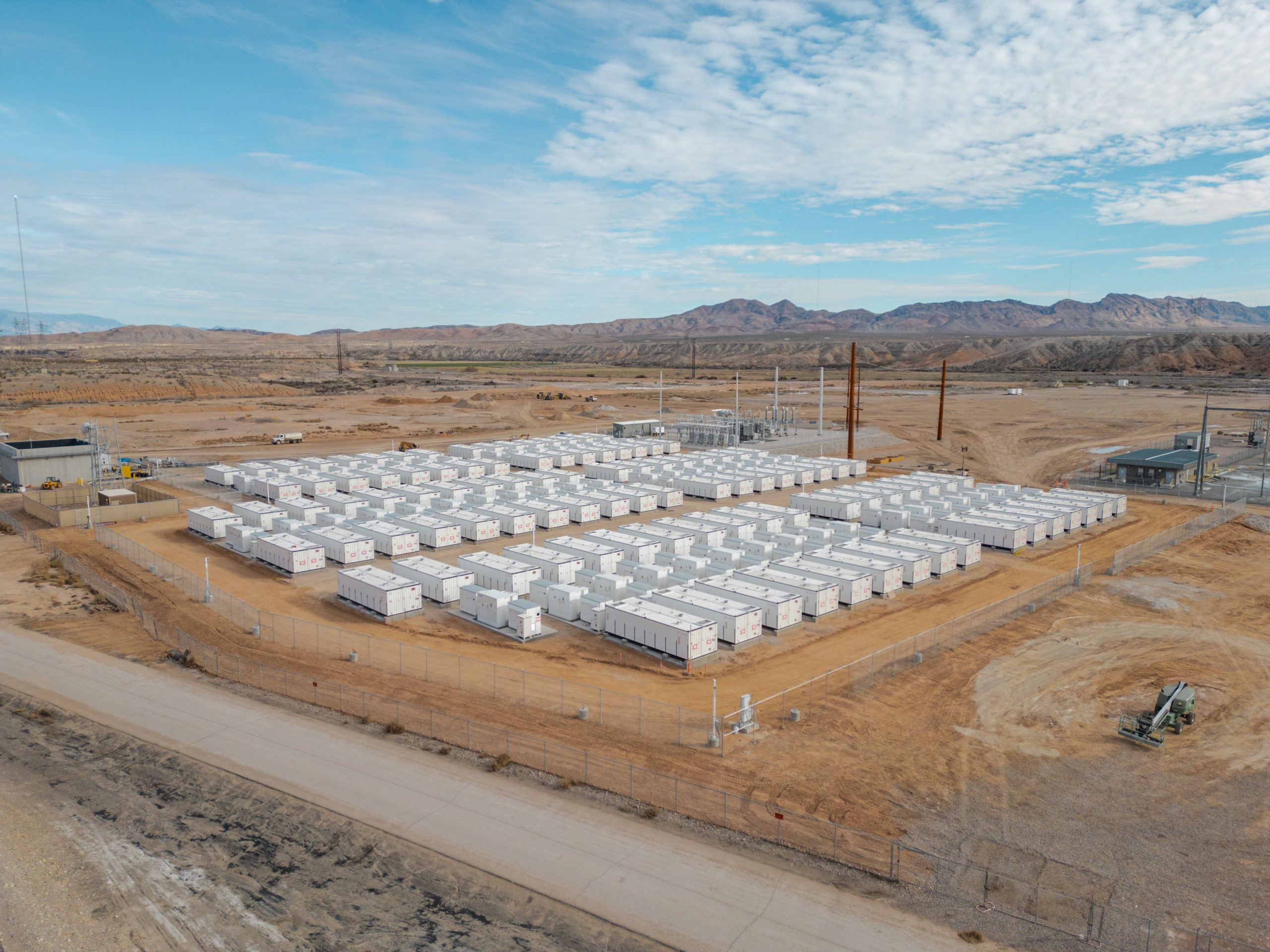
Bulgaria started from almost zero storage capacity at the end of 2024 and had over 2 GW of batteries in operation by May 2026. Greece’s target for the end of 2026 is 1 GW, and to date, a mere 0.7 GW of capacity has been installed. The difference is reflected in the power flows between the two countries.
On 29 April, shortly before 16:00, Bulgarian generation (4.82 GW) already exceeded demand (4.09 GW). Nevertheless, the country imported 879 MW from Greece and its batteries absorbed 1.67 GW. The price in Greece was €0.01/MWh and in Bulgaria €44.34/MWh. Part of the stored energy flowed back to Greece later, while a larger portion went to Romania. Greek solar energy was exported almost for free, and part of it returned during hours when the price was higher.
Eurelectric also credits batteries with smoothing out evening peaks in Bulgaria.
The picture is completed by a recent analysis by the think tank “The Green Tank” regarding the role of Bulgarian batteries in the Greek electricity market. The analysis concludes that the rapid development of batteries in neighbouring Bulgaria reduced, through exports to our country, electricity generation from fossil gas in Greece during expensive evening hours in the July–September 2026 period.
The Bulgarian wholesale price (DAM) remains on average higher than the Greek one. However, this comparison requires two clarifications:
- The mix is different. Wind and solar accounted for 21.7% of Bulgarian generation in 2025, compared with 40.5% in Greece, where fossil gas also accounted for a significant 40.3%. In Bulgaria, the largest share came from nuclear (39%) and coal (22.6%).
- Wholesale prices do not reach Bulgarian households. The price for households is regulated, which in the first half of 2026 stood at €0.117/kWh, excluding taxes, according to Eurostat data. In Greece, the corresponding price was €0.196/kWh, excluding taxes, while the wholesale price is passed on almost immediately to variable tariffs, with the majority of households not having a fixed (blue) tariff. For the Greek consumer, therefore, the evening peak has an immediate cost.
There are currently 64 GW of storage in operation in Europe. According to Eurelectric, this needs to reach 200 GW by 2030. The same report shows that storage is not just about batteries. A system with a high RES share can shift energy or consumption across time in many ways: through batteries, pumped storage, demand response and electromobility.
Data from the Hellenic Energy Exchange confirm that RES generation is already driving down the Day-Ahead Market (DAM) prices during the hours it is available. What keeps the average high are the hours when the DAM is set by fossil gas, with all the volatility of its international market.
Every MWh shifted from midday to the evening is a MWh that is not curtailed and not generated by fossil gas. The rate at which this flexibility increases will determine how quickly cheap generation reaches the bills of Greek households.