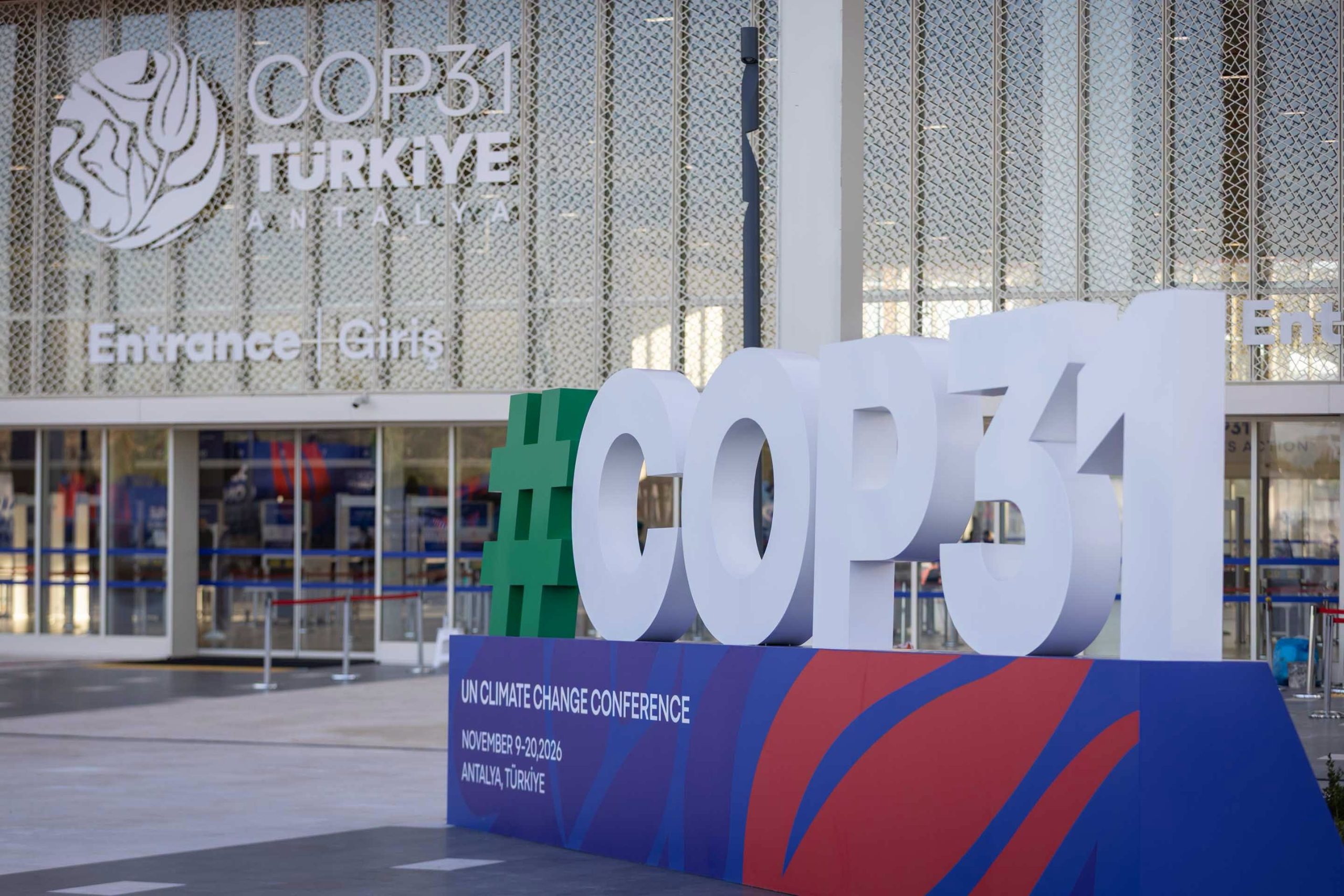
The 31st UN Climate Change Conference of the Parties (UNFCCC COP31), which concluded today in Antalya, Turkey, ended in an unprecedented failure. The failure to reach an agreement was an outcome that many had feared from the outset, particularly due to the emerging refusal of oil-producing countries to sign any text containing a reference to transitioning away from fossil fuels — a mandate set by previous climate conferences and a necessary step forward.
For the record, although the failure to reach a binding agreement at COP15 in Copenhagen in 2009 was considered a failure, COP31 in Antalya brought about the even worse outcome of no agreement whatsoever, whether binding or voluntary. Most importantly, however, the Antalya summit marks a step backwards from previously agreed commitments, even as the reality of climate change is grimmer than ever.
Just weeks before COP31 began, the UN had confirmed that global temperatures are now on track to breach the 1.5°C threshold above pre-industrial levels — a warming limit considered critical to avoiding the worst impacts of climate change. Yet, instead of driving stronger international action, the conference degenerated into a battlefield over three core issues: fossil fuels, finance, and the role of carbon capture technologies.
The fierce clash over fossil fuels
The primary reason for the failure was the refusal of certain oil-producing nations to accept any mention of phasing out or transitioning away from fossil fuels. The final draft decision put forward for approval contained no reference at all to fossil fuels, despite the fact that the burning of coal, oil and gas accounts for the vast majority of anthropogenic greenhouse gas emissions.
The European Union, the UK, Panama, Vanuatu and dozens of other countries rejected the text as inadequate and contrary to scientific reality. Representing the EU, Irish Environment Minister Darragh O’Brien stated that it was “unconscionable” to have a climate agreement without any reference to fossil fuels.
Among the most striking moments of COP31 were the statements by Juan Carlos Navarro, Panama’s Minister of Environment: “We are being held hostage by the oil mafia. And not only that. We are all suffering from Stockholm syndrome: we are in love with our captors. We love the oilmen. We believe we cannot live without them, and they are so clever that they have managed to convince us that they are doing all this for our own good.”
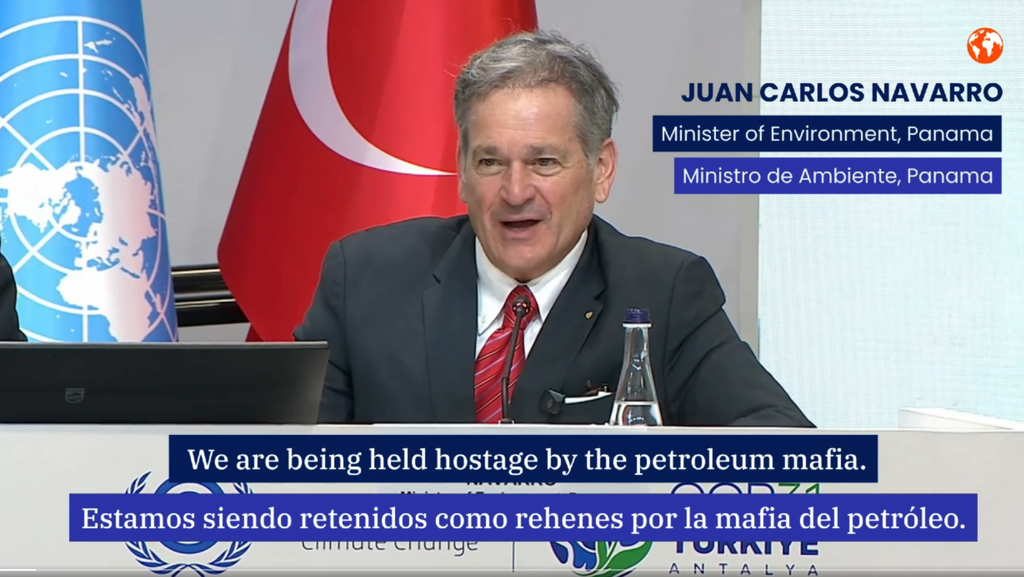
In a press conference organised by the Fossil Fuel Treaty Initiative, Juan Carlos Navarro, Panama’s Minister of Environment, emphatically stated that “we are being held hostage by the oil mafia”.
Inadequate finance for developing nations
A second point of friction was climate finance. Many developing nations argued that pledges from wealthy nations remain far below what is needed for adaptation, resilience, and addressing loss and damage from extreme weather events. The failure to reach consensus on finance further exacerbated the lack of trust between the Global North and South — a fundamental issue that has plagued negotiations for decades.
Countries such as the Philippines, Nepal, and small island states warned that promises without the necessary financial resources do not translate into real action. As the Philippine delegation aptly stated, “a target without means of implementation is a promise without a path to delivery“.
Over-reliance on carbon capture technologies
Another reason for the reaction was the increased emphasis placed by the proposed text on carbon capture and storage (CCS) technologies. Environmental organisations, including the Climate Action Network (CAN), WWF, and the institute Climate Analytics, argued that these technologies cannot substitute for the direct reduction of fossil fuel use and risk being used as an alibi for continuing oil and gas production.
This debate reflects a deeper political conflict: whether the global economy will move towards a genuine energy transition or attempt to maintain the current model by relying on technological solutions of uncertain scale and effectiveness, risks, and very high costs.
Worrying message for the future
UN Secretary-General António Guterres described the outcome as “deeply disappointing”, while stressing that the failure to reach consensus does not change the scientific facts: global warming is accelerating, the impacts of the climate crisis are intensifying, and the world is heading towards exceeding the 1.5°C threshold.
Guterres underlined that fossil fuels remain the primary cause of climate change and accused powerful oil and gas interests of continuing to obstruct progress. He called on governments to accelerate the transition to clean forms of energy, immediately reduce emissions, increase climate finance and provide greater support to vulnerable countries.
The talks collapsed due to sharp divisions between countries demanding a clear commitment to phase out coal, oil and gas and those seeking to protect economies dependent on fossil fuel exports. Compromise drafts put forward failed to secure a consensus.
Despite the failure of COP31 to reach a new agreement, most countries stated that they remain committed to international climate cooperation. They also reaffirmed that the Paris Agreement has already delivered significant results, yielding substantial collective progress. Specifically, as noted in the preamble to the rejected draft decision, prior to the adoption of the Paris Agreement (2015), some projections foresaw an increase in the global average temperature of more than 4°C by the end of the century. Today, provided existing national climate plans are fully implemented, scientific estimates project the expected increase to be around 2.6°C.
The conference highlighted the gulf between scientific necessity and political will, at a time when the window to achieve climate targets is closing dangerously fast.