The 31st UN Climate Change Conference closed in Antalya on 22 November without an agreement. This is the first time since the 2009 Copenhagen summit, following negotiations that exceeded the deadline by almost two days, making it the longest COP on record. The headlines were harsh: “the climate conference that collapsed“, “the worst COP of all time”. UN Secretary-General António Guterres described the outcome as deeply disappointing and blamed powerful oil and gas interests.
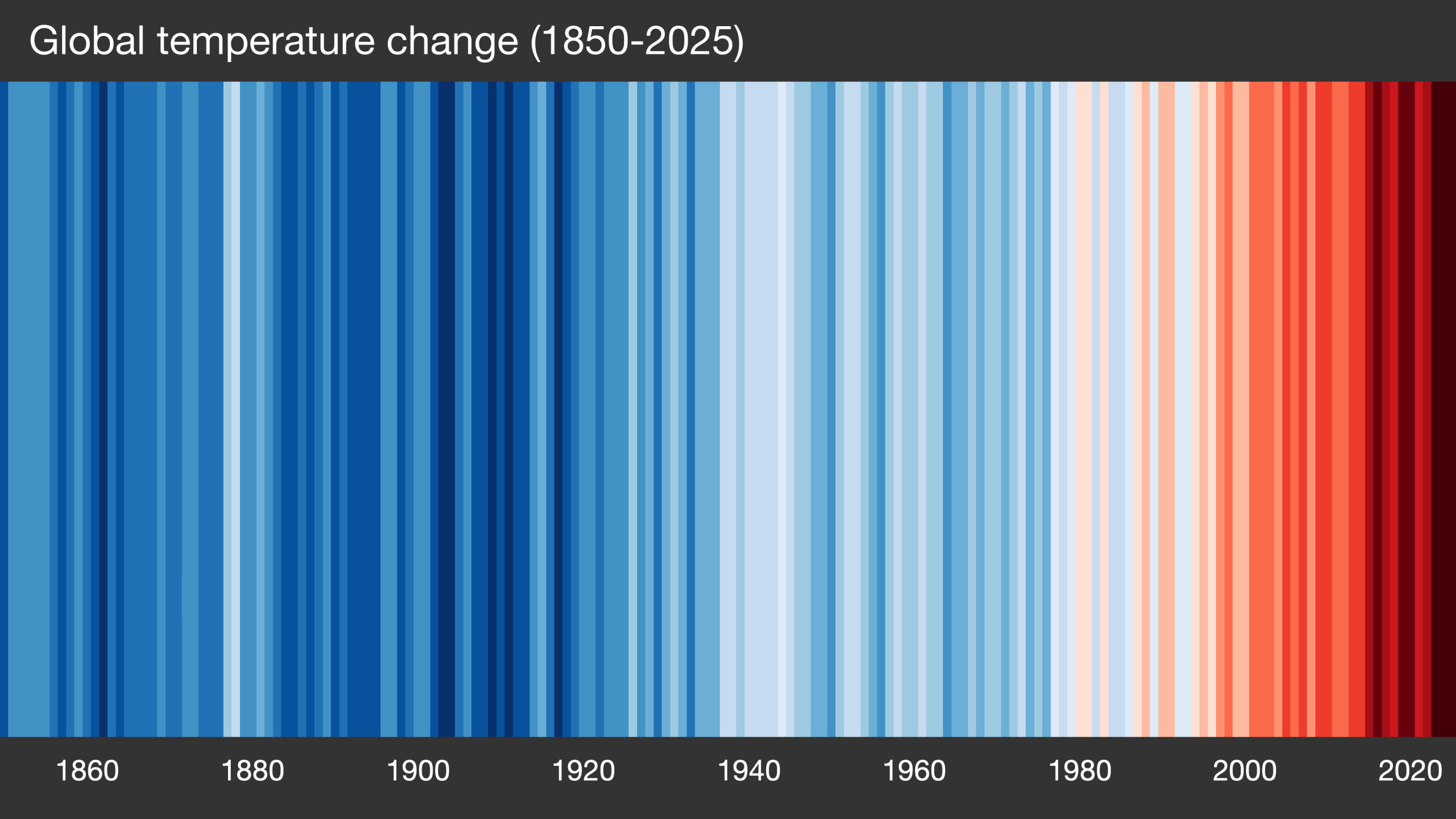
The causes for concern are serious. A few weeks before the conference, the UN confirmed that global temperatures are heading beyond the 1.5°C threshold. The final draft decision made no mention of fossil fuels anywhere, despite them being responsible for the vast majority of emissions. Developing countries left without the finance they demanded for adaptation and loss and damage. The Philippine delegation stated that a target without means of implementation is a promise without a road. Distrust between the Global North and South has grown.
All this is true. However, it is also worth looking at what else happened in Antalya.
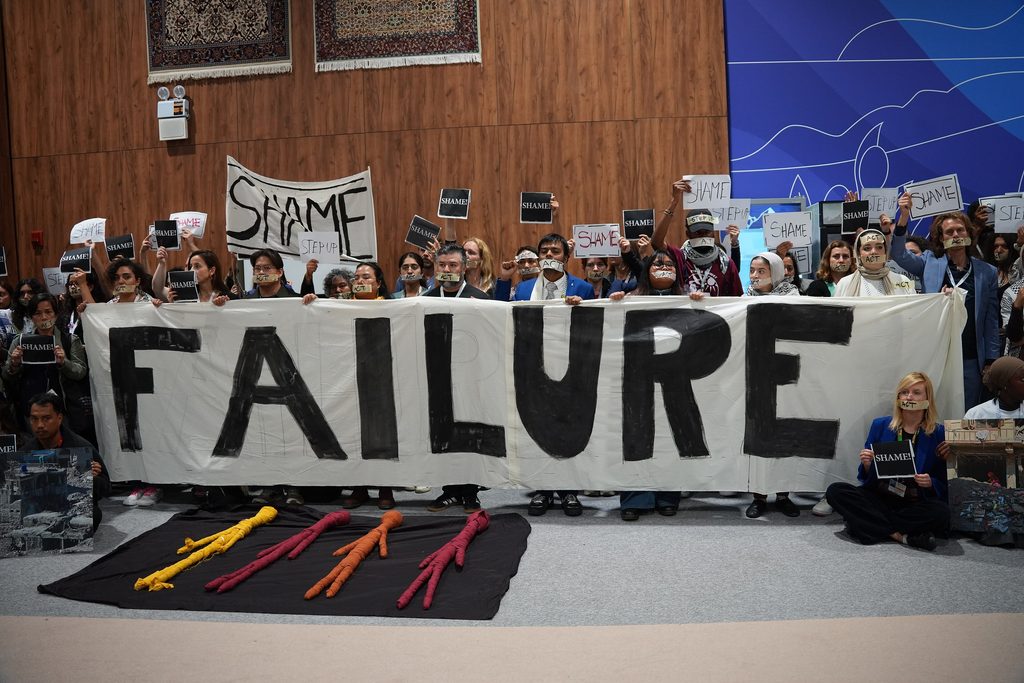
A “no” with substance
At COPs, countries do not sign individually. Decisions are made by consensus, so a single determined objection is enough to block a text. The conference did not collapse because countries grew indifferent. It collapsed because a large group of states refused to accept a text that would mean taking a step backward.
The COP28 commitment in Dubai in 2023 to “transition away from fossil fuels” had been removed from successive drafts. According to TIME, the pressure came from a group of countries led by Saudi Arabia and Russia. The final draft retained only a discreet reference to the Dubai outcome. It is worth noting that China and India accepted the text.
At the closing plenary, the European Union formally rejected the text through Irish Environment Minister Darragh O’Brien, speaking on behalf of the Irish Presidency of the Council. He described a climate agreement that fails to mention fossil fuels as “unforgivable”. The UK, Norway, Panama, Vanuatu, the Marshall Islands and other island states were on the same side. Panamanian Environment Minister Juan Carlos Navarro accused the “oil mafia” of holding countries hostage. In total, around 90 countries rejected the main political text.
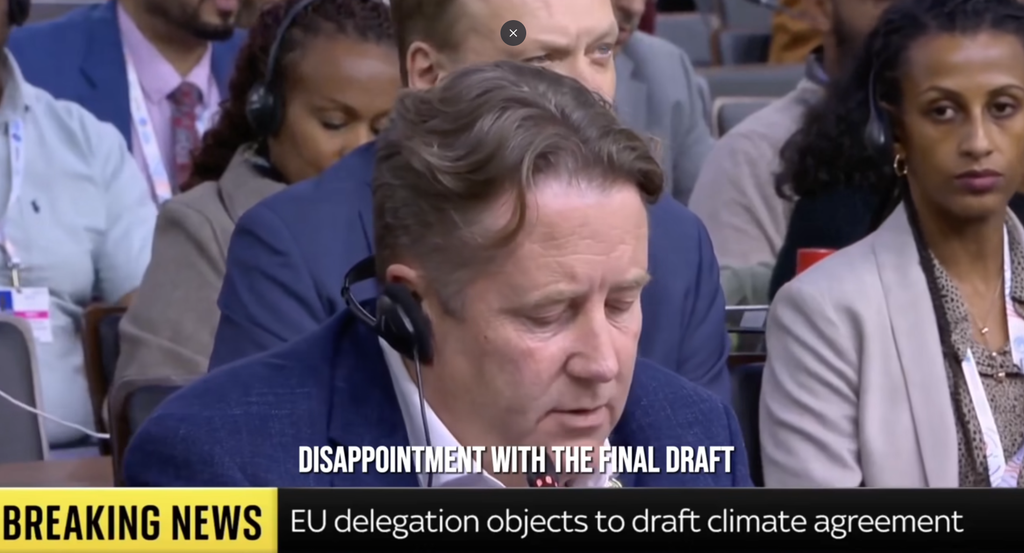
EU representative Darragh O’Brien, Ireland’s Minister for Environment, announcing the European Union’s disagreement with the draft agreement presented by the COP31 presidency in Antalya.
In international negotiations, this is rare. For years the pattern has been familiar: marathon nights, exhausted delegations and, in the end, a lowest-common-denominator text that everyone accepts to avoid the appearance of failure. This time, a large part of the world proclaimed that it prefers no agreement to an agreement that is not aligned with science.
A visible majority
The circle of countries supporting an explicit reference to phasing out fossil fuels was even wider: around 130 governments, meaning two-thirds of those participating, according to the BBC. The breakdown of consensus made visible what consensus usually hides: who wants to move forward and who is putting on the brakes.
The EU was at the centre of this majority and was not isolated. By its side stood the planet’s most vulnerable countries, those already paying a heavy price for the climate crisis. Such an alliance between the wealthy North and small island states is not a given and may prove more valuable than a “foggy” text.
Not everyone agrees with this reading. Some analysts view the collapse as a defeat for the EU, since it failed to push through its position. The question is whether the text that was not adopted matters more than the alliance that emerged.
Action does not wait for consensus
Clean energy no longer needs the permission of a plenary session to move forward. As TIME writes, it is now competitive purely on economic criteria, protects against geopolitical turbulence, and is being deployed worldwide regardless of final texts. The EU’s carbon border tax is already pushing countries like Turkey and Brazil towards carbon pricing.
Alliances of countries wishing to move faster and more effectively are gaining ground. The coalition to transition away from fossil fuels launched in April in Santa Marta, Colombia, is pressing ahead and preparing new national plans, even though Colombia itself withdrew. In Antalya, Denmark, Luxembourg, Spain, and Portugal announced new national plans. The centre of gravity may be shifting away from the requirement for universal state unanimity towards “coalitions of the willing and determined” that lead by example.
Next stop: Addis Ababa
The next conference, COP32, will be held in 2027 in Addis Ababa, Ethiopia, with the support of the African Group of Negotiators. The choice carries weight. Addis Ababa is the seat of the African Union and the UN Economic Commission for Africa, whereas Europe has already hosted 12 COPs. Africa is the continent that has contributed least of all to the climate crisis and is among the first to pay the price.
Ethiopia comes forward with a unified African plan. In September 2025, it hosted the Second Africa Climate Summit with more than 26,000 participants, where the Addis Ababa Declaration was adopted as the continent’s common negotiating position. Following the deadlock in Antalya, we hope that COP32 will make history: bridging the North-South trust gap, finally delivering real finance for adaptation and a just transition, and giving the phase-out of fossil fuels the place it deserves, starting with a joint text. If Antalya was the moment when the majority said “no”, Addis Ababa can become the moment when the world says “yes” together.
From disappointment to mobilisation
Copenhagen in 2009 was also considered a disaster. Six years later, however, came the Paris Agreement, built upon the lessons of that “failure”. TIME sees an opportunity for redesign today as well. And Paris delivered: prior to it, projections pointed to warming of over 4°C by 2100, whereas today estimates speak of around 2.6°C if national plans are fully implemented. It is not enough, but it shows that international cooperation is changing course. The majority of countries stated in Antalya that they remain committed to it.
Antalya can play the same role. A blatant deadlock that receives widespread publicity can be a greater wake-up call than a spurious success. It shows citizens, civil society, and governments that nothing is taken for granted, that fossil fuel interests are powerful, and that pressure must be increased, not eased.
A historic opportunity for Greece
There is also an opportunity here for our country. On 1 July 2027, Greece assumes the six-month Presidency of the Council of the EU, which it will hold until the end of the year. COP32 will take place during this period. Just as the minister of Ireland, which currently holds the presidency, spoke on behalf of Europe in Antalya, so too in Addis Ababa the voice of the EU will, in all likelihood, be Greek.
It is a historic opportunity for our country. Greece is a Mediterranean country already experiencing the consequences of the climate crisis: fires, heatwaves, floods, water scarcity. It also has historic ties with Africa and the Arab world. It can act as a bridge between Europe and the Global South and keep alive the alliance formed in Antalya. Provided there is political leadership, serious preparation and an ambitious agenda.
COP31 did not give us the agreement we need. But it gave us a clear “no” to regression and a majority that now has a face. From Antalya to Addis Ababa, and with Greece at the helm of Europe, we have one year to turn this “no” into an agreement that will go down in history.